Mexican wedding traditions center on family, faith and a long, joyful party. The best known are the padrinos and madrinas who sponsor the couple, el lazo (a cord placed around the pair), las arras (13 coins), and a reception with mariachi, the víbora de la mar and a late-night tornaboda. Below, we explain what each one means and how couples bring them into a beach destination wedding.
Many of these customs come from Catholic church weddings. Others are pure celebration. You can include as many or as few as feel right, and you do not need Mexican heritage to honor them with care.
The people: padrinos and madrinas
In a traditional Mexican wedding, the couple chooses padrinos and madrinas, often translated as sponsors or godparents. They are usually close relatives or family friends, and the role is closer to mentor than to bridesmaid or groomsman.
Sponsors often help pay for specific parts of the wedding. A couple might have padrinos de lazo, padrinos de arras, padrinos de biblia (Bible), padrinos de cojines (the kneeling pillows) and padrinos de flores. Others sponsor the cake, the drinks or the music.
The list is flexible. Each title is a way to thank someone who supported the couple, and to give them a visible place in the day.
How to adapt it
At a destination wedding, you might name two or three sponsor couples instead of a dozen. Give each one a clear moment: carrying the lazo, presenting the coins, or doing a reading. A short note in your program helps guests understand who they are.
The ceremony rituals
El lazo (the wedding lasso)
After the vows, the padrinos de lazo drape a cord around the couple’s shoulders in a figure eight. The lazo can be a silk rope, a flower garland or an oversized rosary. It shows that two lives are now joined as one.
In a Catholic Mass, the couple wears the lazo through the rest of the service, and the priest or sponsors remove it at the end. Many families keep it at home afterward.
Las arras (the 13 coins)
Las arras are 13 coins, often gold-toned and presented in a decorative box or tray. In a church ceremony, the priest blesses them. The number is commonly said to represent Jesus and the 12 apostles.
Traditionally, the groom gives the coins to the bride as a promise to provide for the household. Many couples now exchange them both ways, so each partner pledges to care for the other. That modern version fits well in a symbolic ceremony.
The Bible and rosary
Sponsors may give the couple a Bible and a rosary to bless their home and their faith life together. In some weddings, the rosary itself becomes the lazo. If faith is central for you, this is a meaningful role for a grandparent or godparent.
Flowers for the Virgin of Guadalupe
Some couples present a bouquet to the Virgin of Guadalupe and pray for her blessing. At a beach ceremony, a small framed image on a side table with a few flowers can carry the same intention.
The reception traditions
Mariachi
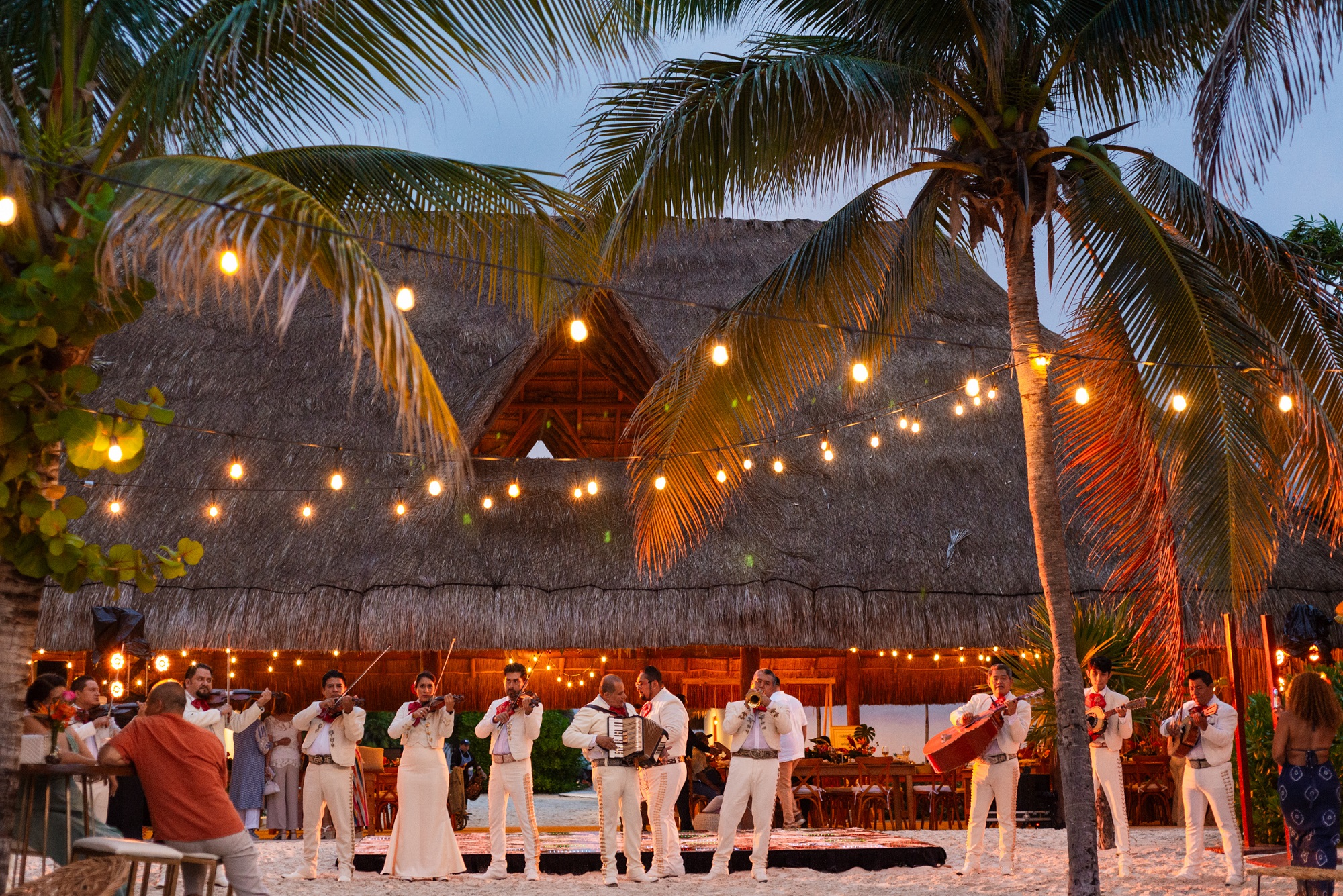
Mariachi is one of Mexico’s signature sounds. UNESCO added it to its list of Intangible Cultural Heritage in 2011. Musicians wear outfits adapted from the charro costume and play rancheras, corridos and other classics.
At weddings, mariachi may play during the cocktail hour, perform a couple’s favorite songs, or burst in later in the night to get everyone dancing. In some families, a group arrives after midnight to serenade the couple and guests.
La víbora de la mar
The “sea serpent” is a high-energy group dance. Guests hold hands in a long line and weave across the floor while everyone sings. In many versions, the couple stands on chairs and forms an arch with their arms, and the line passes underneath.
It is loud, silly and great for photos. Brief your photographer in advance, and make sure the chairs are sturdy and on level ground.
The money dance
During el baile del billete, guests pin bills to the couple’s clothes for a short dance with the bride or groom. It is a chance to offer personal good wishes, and the money can help with the honeymoon. Some couples ask a friend to collect the cash so attire stays clean.
If your guests are not familiar with it, have the DJ or emcee explain it in a sentence before it starts.
Mexican wedding cookies
Polvorones are crumbly, buttery cookies rolled in powdered sugar. The name comes from the Spanish word polvo, meaning dust. The recipe came to Mexico from Spain, and the cookies became a wedding and holiday treat.
The English name “Mexican wedding cookies” is mostly a US label. They make an easy favor or a sweet addition to the dessert table.
La tornaboda
The tornaboda is the after-party. Traditionally, it was a breakfast the next day for close family and friends. Today it is often a late-night or early-morning gathering after the main reception, with comfort food like chilaquiles, tacos or pozole.

The look: papel picado and attire
Papel picado is a folk art of cut tissue paper, strung into colorful banners. The town of San Salvador Huixcolotla, Puebla, is considered its birthplace. For weddings, it is often made in white, with doves, hearts and churches cut into a lace-like design.
Some brides wear a mantilla, a lace veil, and some grooms choose a charro-inspired suit. These are personal choices, not requirements.
How to weave traditions into a beach destination wedding
A beach ceremony in Mexico is a natural setting for these customs. The key is to choose the ones that mean something to you and give them room. A few practical ideas:
- Pick two ceremony rituals, not five. The lazo and the arras work beautifully in a symbolic ceremony on the sand and take only a few minutes each.
- Match the lazo to the setting. A flower or shell-accented cord suits the beach. A family rosary adds history.
- Explain each ritual. Your officiant can say a line or two in English and Spanish, or add the meaning to your printed program.
- Time the mariachi. A short set at the cocktail hour or a surprise entrance later keeps the energy high without crowding dinner.
- Hang papel picado where it is sheltered. Tissue paper and sea breeze do not mix well. Under a roof or palapa, it holds up much better than over the aisle.
- Plan a tornaboda. Late-night tacos after the dancing feel festive and practical.
- Use polvorones as favors. Pack them in small boxes or bags with a tag explaining the name.
If you are planning a symbolic ceremony rather than a legal one, these rituals can take center stage. Our guide to legal vs. symbolic weddings in Mexico explains the difference.
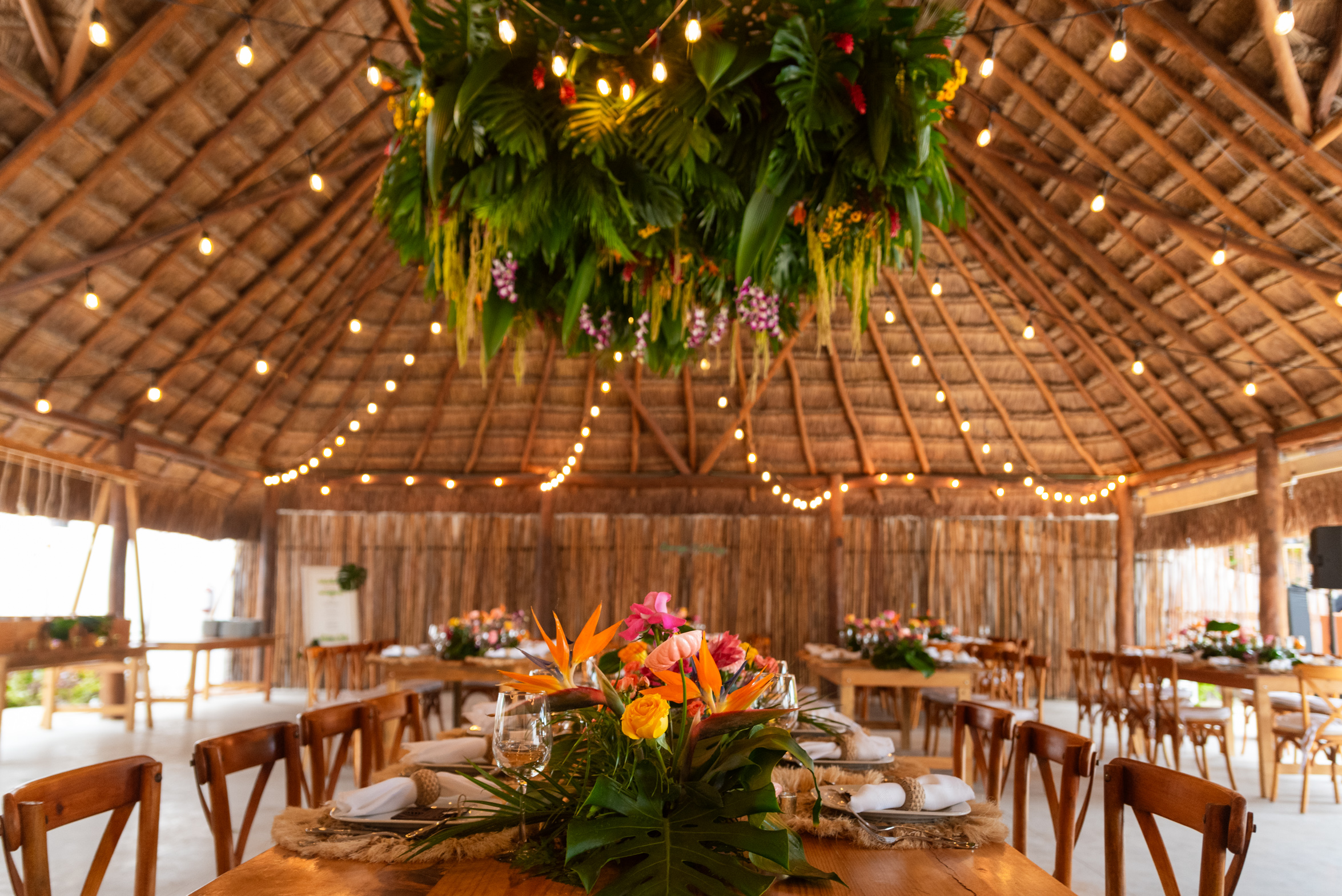
At our private beachfront venue in Puerto Morelos, the ceremony takes place on the sand and the reception moves under an open-air palapa facing the sea. That layout gives the lazo and arras a quiet seaside moment, and gives the víbora de la mar a covered dance floor.
Respecting the traditions
These customs carry real meaning for many Mexican families. If you are borrowing them, a few habits keep things respectful:
- Ask family members with Mexican roots which traditions matter most to them.
- Use the real names and explain them, rather than treating them as props.
- Skip costume-style sombreros and caricatures. Let music, food and ritual speak for themselves.
- Hire local musicians, bakers and artisans when you can.
Frequently asked questions
What do the 13 coins mean in a Mexican wedding?
The 13 coins, called las arras, are often said to represent Jesus and the 12 apostles. They symbolize a promise to share resources and care for each other. Many couples now exchange them in both directions.
Who places the lazo?
Traditionally, the padrinos de lazo, a sponsor couple chosen by the bride and groom, place it around the couple’s shoulders after the vows.
Can we include Mexican traditions in a symbolic ceremony?
Yes. The lazo and arras are easy to adapt to a non-religious or interfaith ceremony. Your officiant can frame them around unity and mutual care.
What is a tornaboda?
It is the after-party. It used to be a next-day breakfast, and today it is often a late-night gathering with tacos or other comfort food once the main reception winds down.
Plan your celebration
For more ideas on setting the scene, see our beach wedding ideas. When you are ready to talk dates, contact us to check availability and ask for a quote.